Total Cost of Security (TCS)™
A Boardroom Framework for Quantifying the Economics of Security
Most procurement metrics measure cost, inventory, coverage, or market exposure independently.
TCS™ measures something different:
The economic value of security itself.
Why Traditional Metrics Fall Short
Procurement teams traditionally rely on a combination of:
- Coverage (%)
- Inventory Buffers
- WACA
- Market Pricing
- VaR
- Supplier Diversity
Each metric provides useful information.
However, none answer the question:
What is the economic value of our security strategy?
This creates a disconnect between procurement, operations, treasury, and the board.
The TCS Framework Solves The Problem
The Traditional Discussion
Fuel Manager:
We need 24 months inventory.
CFO:
Why not 12?
Fuel Manager:
Security.
Not a satisfying answer.
The TCS Discussion
Fuel Manager:
At current market conditions:
- Contract hedge benefit = $22 million
- Inventory carrying cost = $5 million
- Net security value = $17 million
Now the discussion becomes quantitative.
That is powerful.
The strongest aspect of TCS is not that it measures fuel cost.
It measures the economics of security itself.
That is a conversation fuel managers have been trying to have with CFOs for decades.
THE TCS FRAMEWORK
The Four Building Blocks
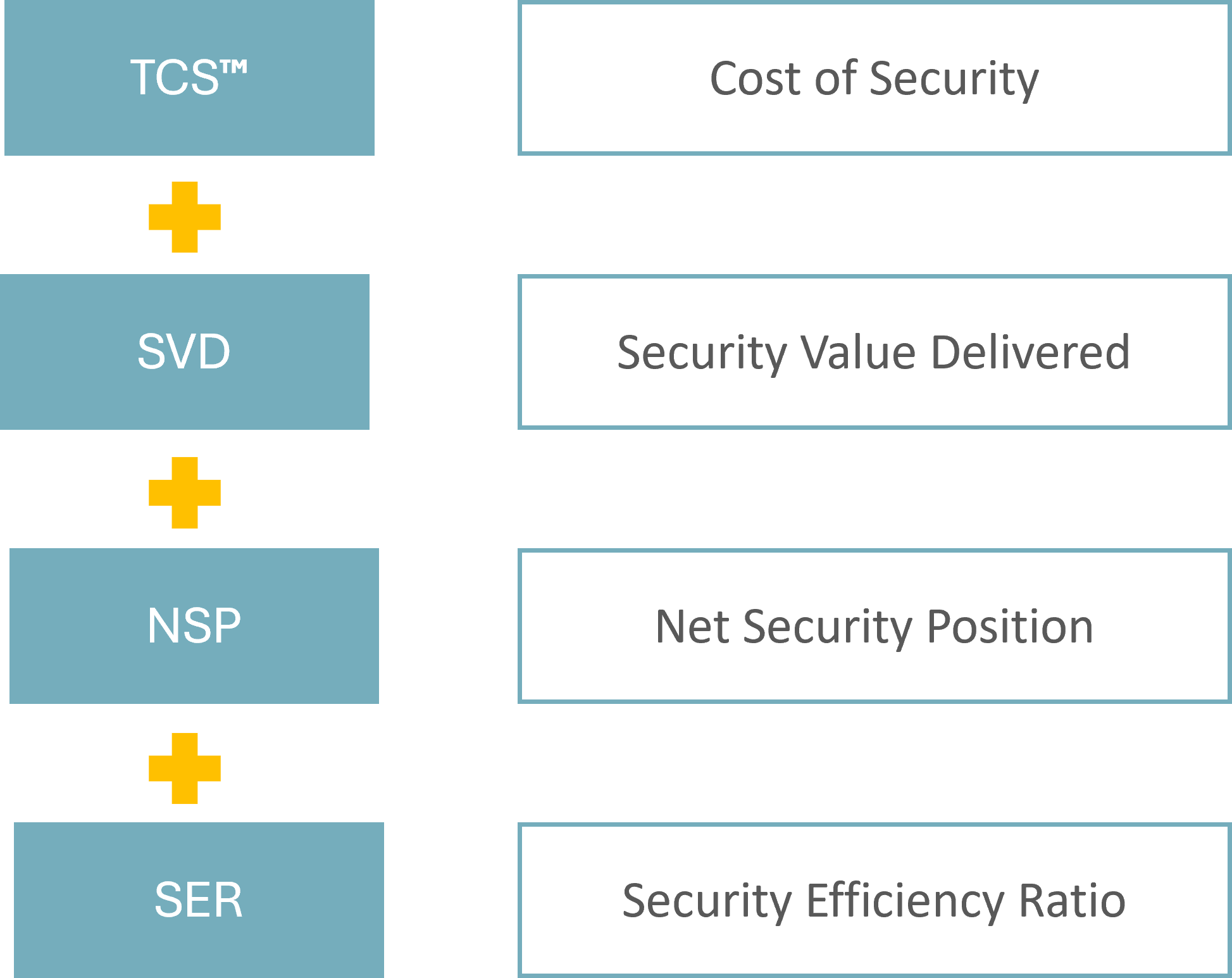
Cost of Security

TCS™
Measures the annual cost of maintaining contractual and physical supply security.
Contract Security Premium
+
Physical Security Cost
=
Total Cost of Security
Value of Security

Security Value Delivered (SVD)
Measures the current market value created by historical procurement decisions.
Current Spot Price
vs
Portfolio WACA
Net Benefit

Net Security Position (NSP)
Measures the net economic benefit generated by the security strategy.
Security Value Delivered
-
Total Cost of Security
=
NSP
Efficiency

Security Efficiency Ratio (SER)
Measures how effectively security spending generates value.
Security Value Delivered
÷
Total Cost of Security
=
SER
Boardroom Shield™
Translating Security Into Financial Outcomes
- Inventory Levels
- Contract Coverage
- Supplier Capacity
- Market Pricing
TCS™ reframes the discussion.
Instead of asking:
Why are we carrying inventory and paying above Spot?
Executives can ask:
What economic value does our security strategy create?
The result is a common language that aligns:
Procurement
Operations
Risk
Treasury
Executive Leadership
around a single financial framework.
WHAT QUESTIONS DOES TCS™ ANSWER?
What value did our historical strategy create?
Answered by:
Security Value Delivered (SVD)
What does security cost us today?
Answered by:
Total Cost of Security (TCS)
Is security worth paying for?
Answered by:
Net Security Position (NSP)
and
Security Efficiency Ratio (SER)

WHERE CAN TCS™ BE APPLIED?
Fuel Security Strategy
Evaluate inventory policy, contract structures, and security premiums.
Strategic Sourcing
Compare alternative supply strategies using a common financial framework.
Board Reporting
Translate procurement decisions into defendable economic outcomes.
Accelerated
Stress-test security economics across alternative market conditions.
Current application:
Uranium Procurement Strategy
TCS™ is currently deployed through the Uranium Procurement Strategy ecosystem, supporting:
- Executive Toolkit™
- TCS Engine™
- Strategic Advisory
for nuclear utilities operating in increasingly constrained supply environments.
WHAT'S NEXT