

The Nuclear Fuel Market Today Looks Uncomfortably Similar to Automotive Chips in 2020/21
In a market where physical access has become the binding constraint, Supplier Relationship Management is no longer optional soft-skill work. It is a measurable component of Total Cost of Supply Security.
-
Introduction: From Price Optimization to Access Security
For much of the past two decades, nuclear fuel procurement operated within a relatively accommodating supply environment. Competitive tenders, aggressive negotiation, and rigorous management of contractual terms were rational procurement strategies and often generated measurable commercial benefits. Success was largely assessed through unit cost, budget performance, and coverage metrics.
That environment has changed.
Conversion capacity remains concentrated and is operating near practical limits. Western enrichment capacity is expanding, but expansion requires significant capital investment and multi-year development timelines. At the same time, geopolitical restrictions have reduced access to a significant portion of previously available Russian material and increased competition for Western fuel-cycle services. The binding constraint is no longer the lowest evaluated price on a bid tab. It is the ability to secure reliable physical access to fuel-cycle capacity when markets become constrained.
This challenge is not unprecedented.
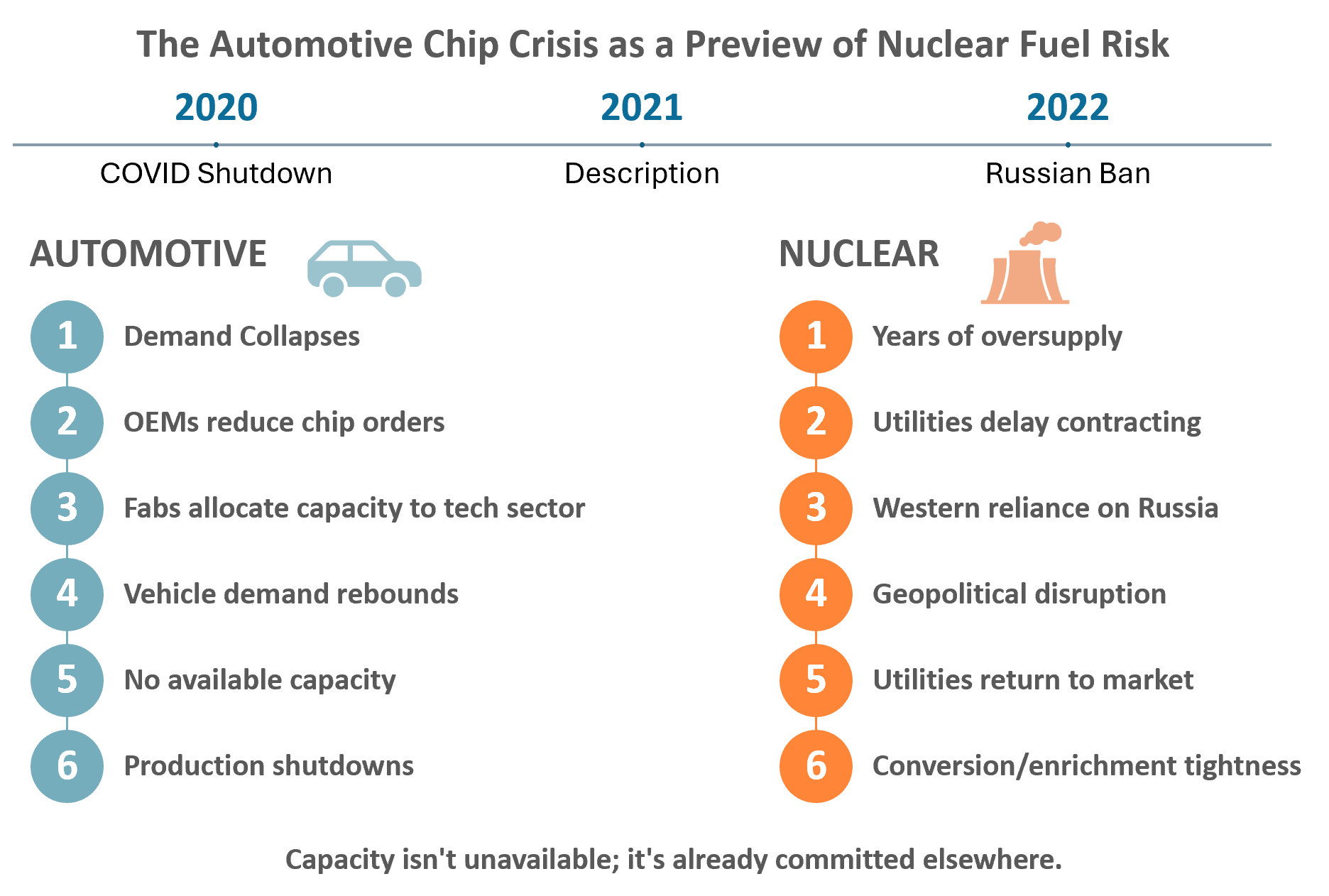
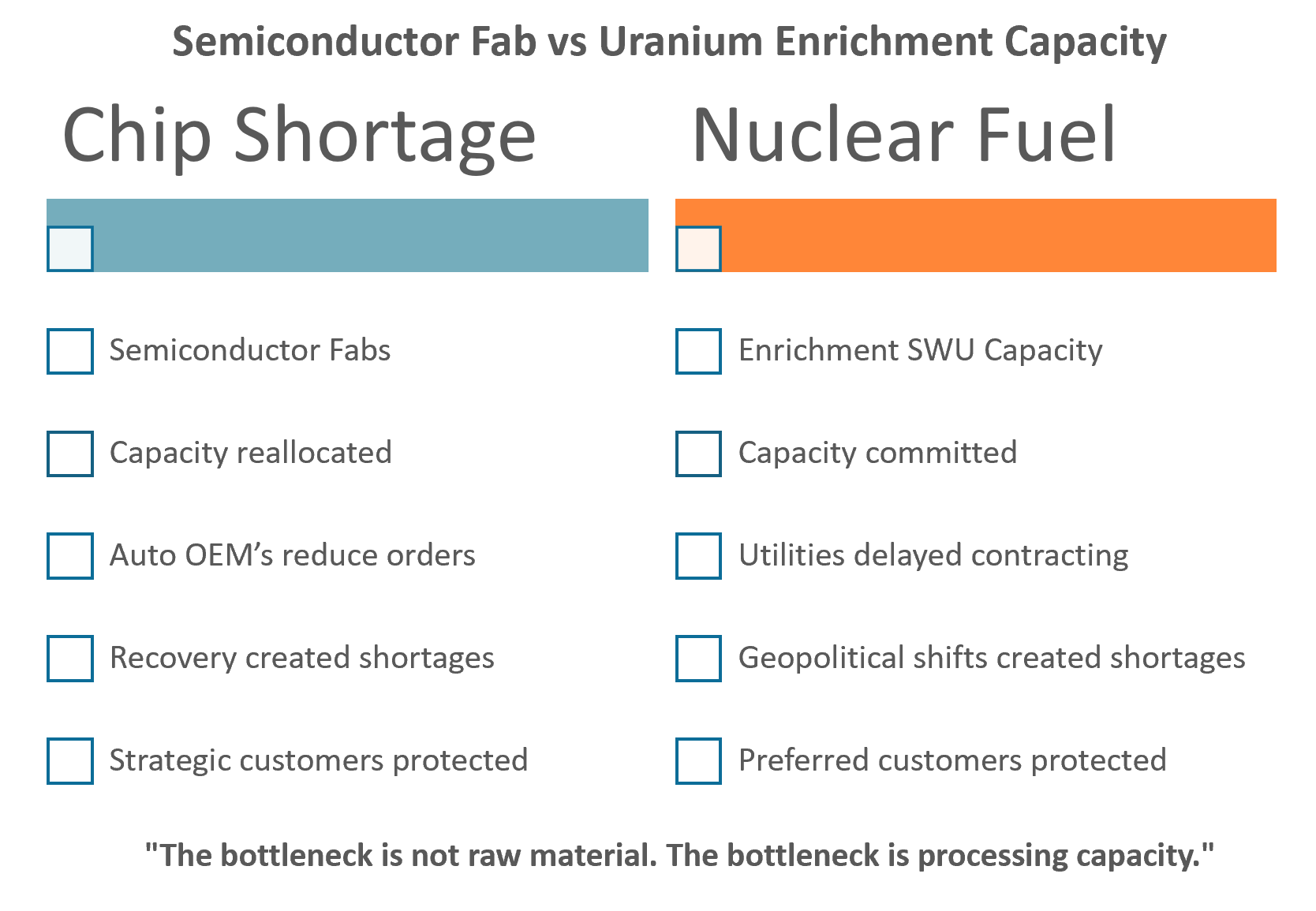
The automotive semiconductor crisis of 2020-21 provides a powerful illustration of how constrained-capacity markets behave. During the early stages of COVID-19, automotive manufacturers reduced semiconductor orders in response to collapsing vehicle demand. Semiconductor foundries subsequently redirected available fabrication capacity toward consumer electronics, cloud infrastructure, and technology customers offering stronger demand visibility and long-term commitments. When automotive demand recovered faster than expected, manufacturers discovered that fabrication capacity had already been committed elsewhere and could not be rapidly recovered. The result was years of production disruption and billions of dollars in lost revenue. Suppliers allocated scarce capacity not according to historical purchasing volumes alone, but according to strategic customer value and commitment. [mckinsey.com], [bakertilly.com], [mckinsey.com]
The nuclear fuel market today exhibits many of the same structural characteristics. Conversion and enrichment facilities have become the equivalent of semiconductor fabrication plants: highly specialised, capital-intensive assets with limited spare capacity and long expansion lead times. As a consequence, a critical strategic question emerges:
When capacity becomes scarce, how will suppliers classify your utility?
Under these conditions, Supplier Relationship Management (SRM) becomes more than a supporting procurement activity. It becomes a strategic variable influencing fuel security outcomes. Within the Total Cost of Security (TCS™) framework, SRM therefore deserves recognition as a formal Resilience Pillar.
The Semiconductor Playbook: A Warning for Nuclear Fuel Buyers
-
How Suppliers Apply Preferencing When Capacity Tightens
When demand exceeds available capacity, suppliers move from a transactional sales model to an allocation model.
The Supplier Preferencing Matrix provides a useful framework for understanding this behavior.
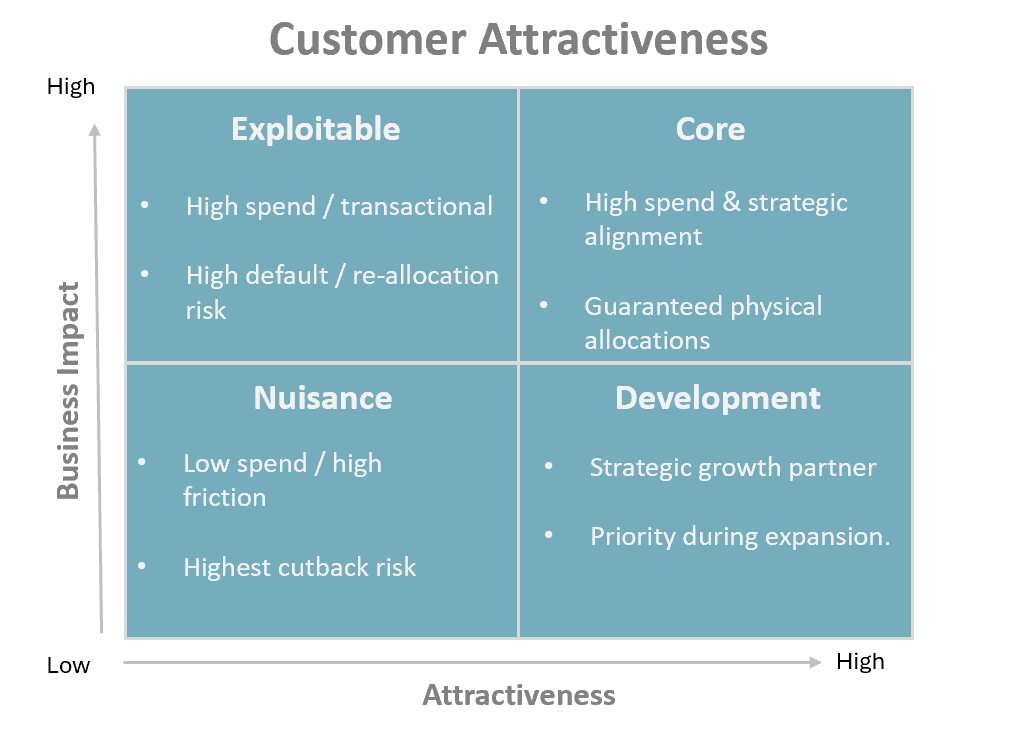
- Core
- High spend + high attractiveness
- Core customers typically receive priority access, greater flexibility, collaborative support, and accommodation when unexpected challenges arise.
- Development
- Lower current spend + high future attractiveness
- These customers are often protected and nurtured because suppliers see future strategic value.
- Exploitable
- High spend + low attractiveness
- These customers generally receive contracted volumes but little discretionary support during periods of stress.
- Nuisance
- Low spend + low attractiveness
- These customers face the greatest risk of reduced flexibility, delayed accommodation, and lower allocation priority.
This is not merely procurement theory.
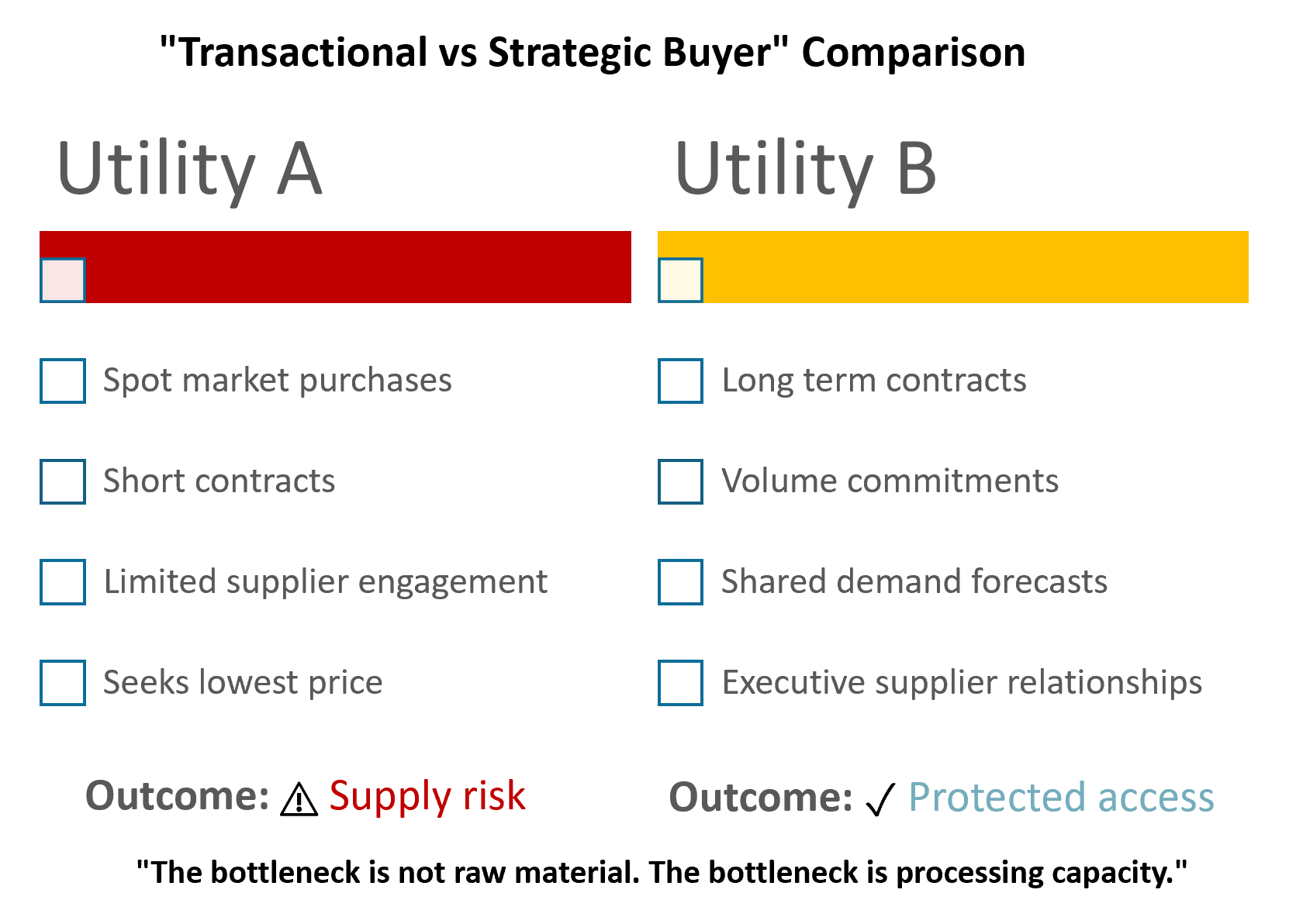
During the semiconductor shortage, foundries effectively applied similar allocation logic. Customers with long-term commitments, strong planning visibility, collaborative relationships, and strategic importance received greater access to scarce fabrication capacity than buyers seeking short-term transactions. Even major automotive manufacturers discovered that size alone did not guarantee priority treatment. Companies that had invested in strategic supplier relationships were often better positioned than those relying primarily on purchasing leverage. [mckinsey.com], [mckinsey.com], [bakertilly.com]
The same economic principles apply in nuclear fuel markets.
Conversion and enrichment suppliers operate facilities characterized by long investment cycles, finite productive capacity, and high barriers to expansion. Once capacity becomes substantially committed, suppliers inevitably make judgments regarding which customers warrant flexibility, accommodation, and discretionary support.
For utilities, the implication is straightforward:
Remaining in the Exploitable or Nuisance quadrant is not merely a relationship issue. It is a supply security risk.
Preferred-customer status is therefore not a soft relationship outcome. It is a determinant of resilience when capacity allocation becomes necessary.
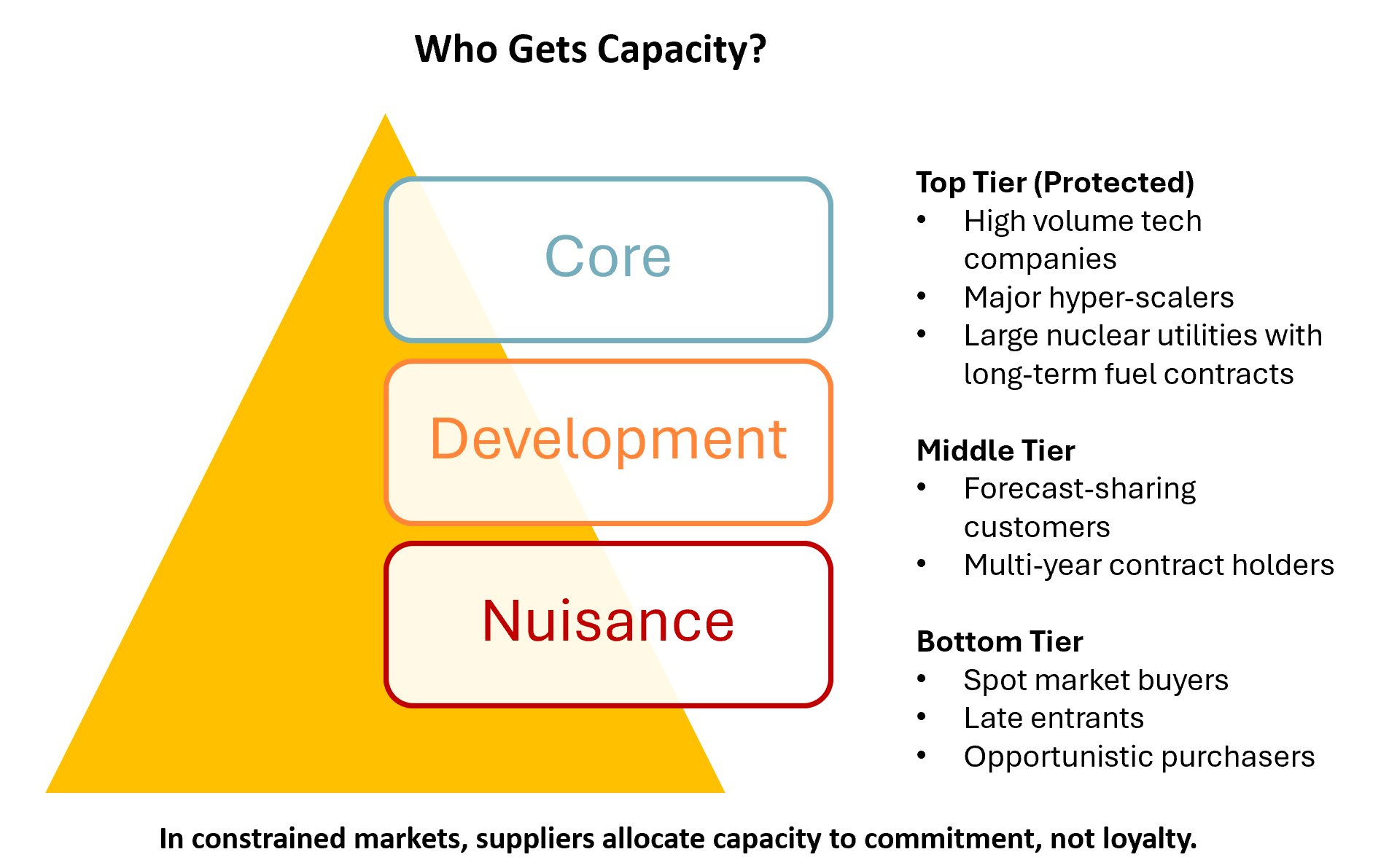
2.1 Who Gets Capacity When Markets Tighten?
Supplier Preferencing Pyramid:
Executive Insight
The automotive industry did not suffer because semiconductors ceased to exist.
It suffered because available production capacity had already been allocated to customers perceived as more strategically valuable.
Nuclear fuel buyers should assume the same allocation logic will apply to conversion, enrichment, fabrication, and future advanced-fuel services.
-
Contract Structures and Relationship Friction: Advisory Guidance
Nuclear fuel contracts necessarily contain detailed commercial mechanisms covering items such as delivery tolerances, tails assay provisions, flexibility notifications, audit rights, and operational performance requirements.
These provisions serve legitimate commercial purposes.
However, the manner in which they are administered can materially influence supplier perceptions over time.
Industry participants frequently observe that persistent adversarial behavior, routine escalation of minor disputes, excessive reliance on formal notices, and highly transactional engagement can gradually reduce account attractiveness. While most commercial disputes remain confidential, the underlying behavioral dynamic is well understood across supply-constrained industries.
In effect, suppliers remember which customers create friction and which customers facilitate solutions.
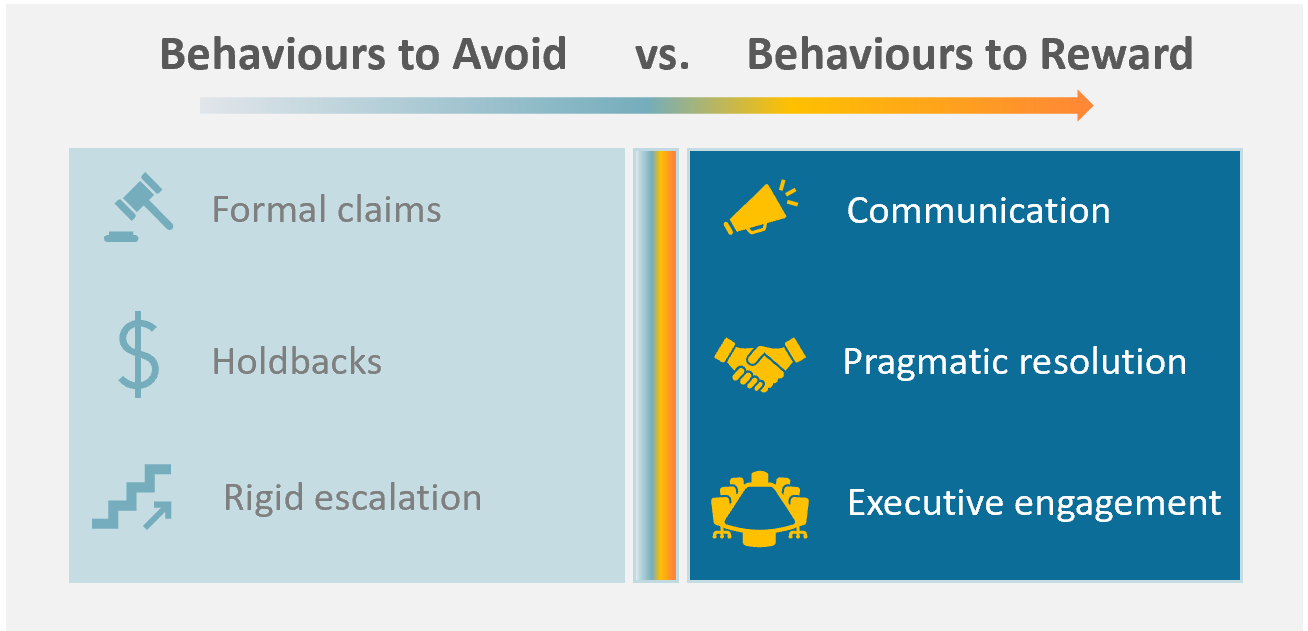
Behaviors That May Erode Preferred-Customer Standing
- Treating minor operational variances as formal claims.
- Routine use of payment holdbacks as negotiating leverage.
- Excessive audit demands with limited commercial justification.
- Escalating operational issues directly into formal disputes.
- Maintaining a purely transactional posture within long-term partnerships.
Behaviors That Strengthen Preferred-Customer Standing
- Early communication of forecast needs and constraints.
- Commercially pragmatic resolution of minor variances.
- Consistent payment and volume performance.
- Regular executive-to-executive engagement.
- Constructive collaboration when flexibility is required.
These recommendations do not imply reduced commercial discipline.
Rather, they recognize that preserving supplier attractiveness may influence future access to capacity in precisely the same manner that strategic customer status influenced access to semiconductor fabrication during the automotive shortage.
-
Four Practical SRM Levers That Strengthen Resilience
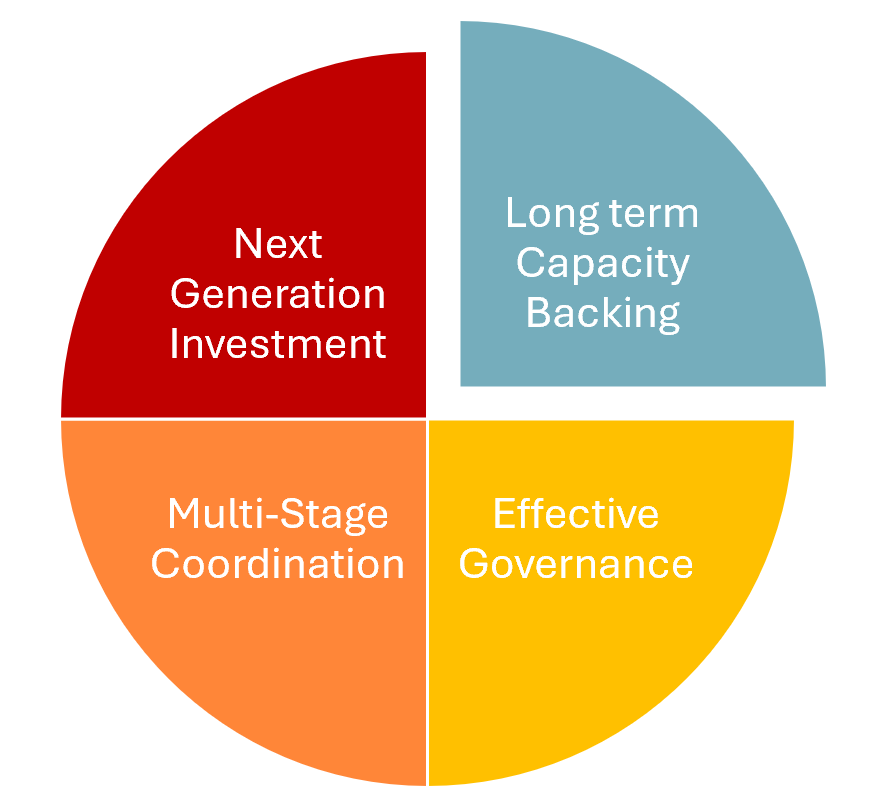
Utilities can deliberately strengthen their position on the Preferencing Matrix through four reinforcing actions.
-
Long-Term Capacity Backing
Multi-year commitments help underwrite conversion and enrichment investments while demonstrating strategic intent.
This mirrors the approach adopted by major technology firms, which routinely secure manufacturing capacity years ahead of anticipated need. Automotive manufacturers learned that attempting to procure scarce capacity after a supply shock is significantly more difficult than reserving it beforehand. [mckinsey.com], [mckinsey.com]
-
Executive Governance and Top-to-Top Engagement
Senior-level engagement signals strategic importance.
Semiconductor shortages demonstrated that suppliers frequently reserve discretionary support for customers viewed as long-term partners rather than transactional buyers. Executive engagement creates institutional relationships that can become extremely valuable during market disruptions. [mckinsey.com]
-
Multi-Stage Commercial Coordination
Utilities that coordinate uranium, conversion, enrichment, and fabrication requirements across the fuel cycle increase their strategic relevance to suppliers.
Integrated demand signals create stronger incentives for collaboration and long-term partnership.
-
Early Participation in Next-Generation Capabilities
Participation in LEU+, HALEU, and advanced-fuel initiatives positions utilities as development partners rather than short-term purchasers.
Development partners are frequently viewed more favorably when new capability and capacity become available.
Different Industry. Same Economics.
-
Linking SRM to the TCS™ Resilience Pillars
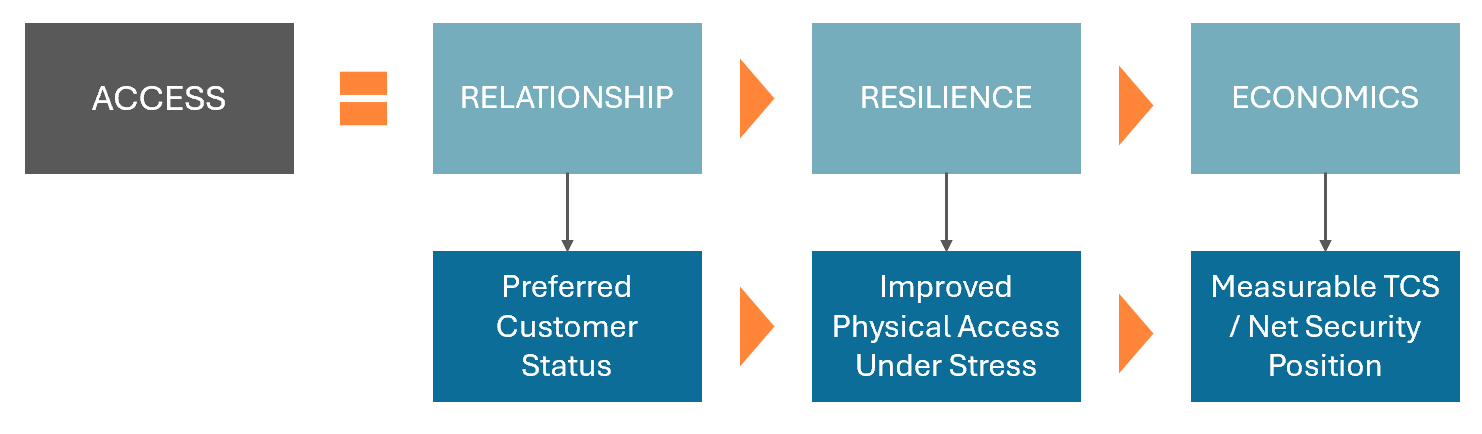
Within the Total Cost of Security framework, Supplier Relationship Management is recognized as a formal Resilience Pillar.
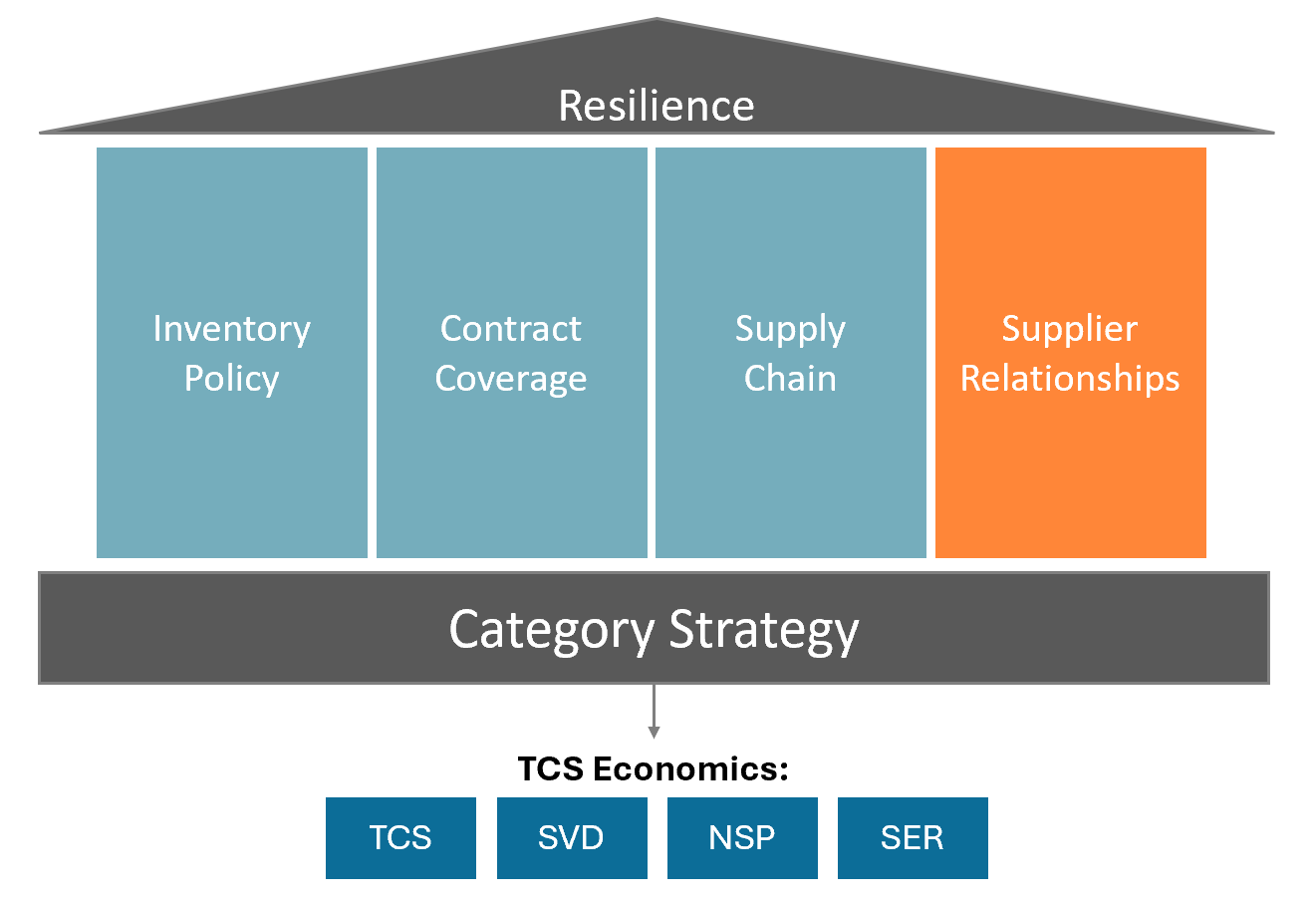
This reflects an important reality:
Resilience is influenced not only by contracts, coverage levels, and inventory positions, but also by how suppliers perceive the utility itself.
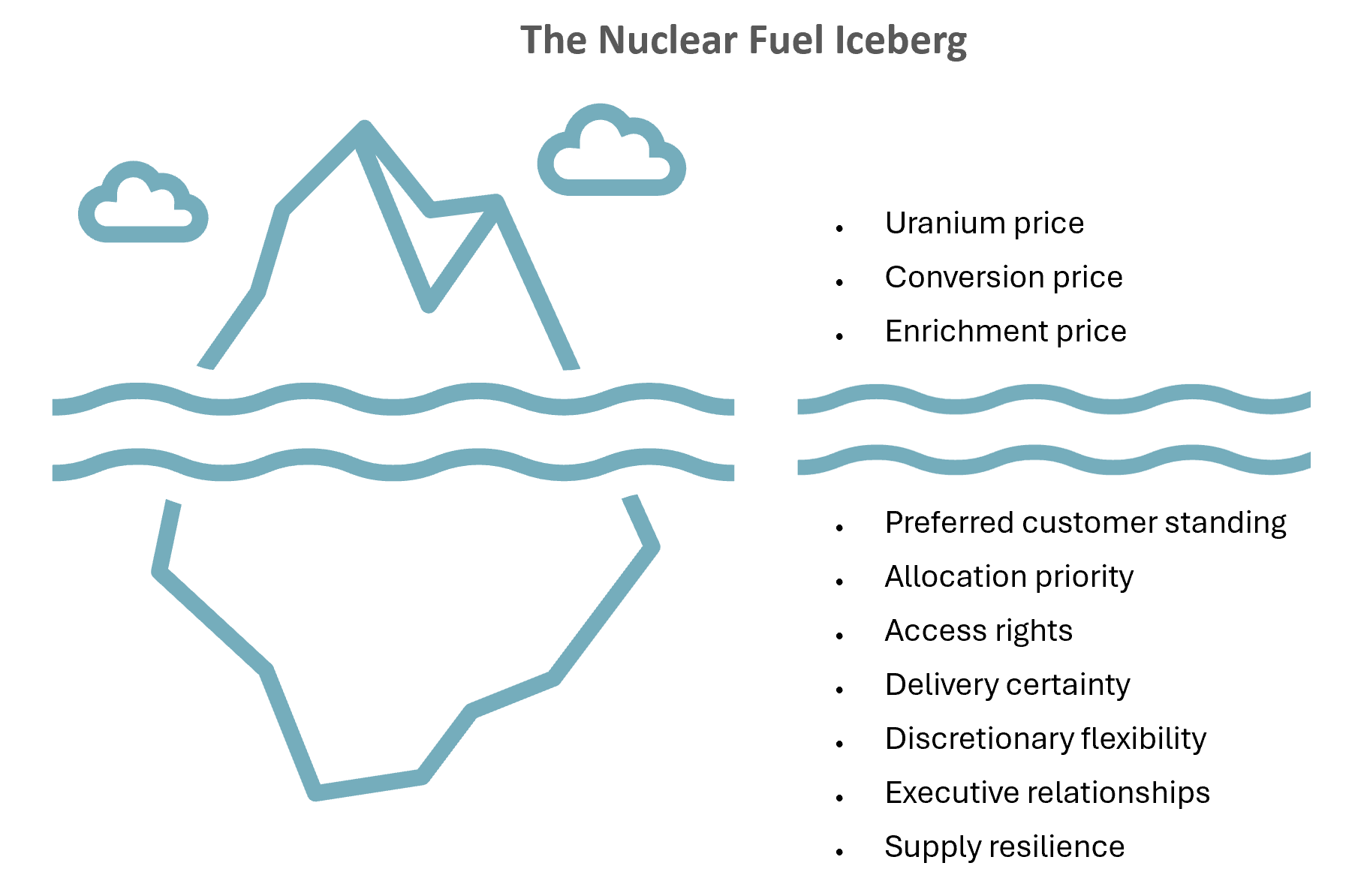
The semiconductor crisis demonstrated that the consequences of weak supplier positioning rarely appear first as price increases. Instead, costs emerge through production disruption, loss of flexibility, emergency procurement activity, and reduced access to scarce capacity. The true economic impact lies beneath the surface.
The same principle applies within nuclear fuel markets.
A utility occupying a preferred-customer position is more likely to receive accommodation, flexibility, and discretionary support during periods of market stress. This does not replace sound contracting. Rather, it increases the probability that contractual protections can be supplemented by collaborative supplier behavior when circumstances demand it.
Within TCS™, this relationship becomes measurable.
The framework links supplier attractiveness to:
- Total Cost of Security
- Security Value Delivered
- Net Security Position
- Security Efficiency Ratio
By treating Supplier Relationships and Preferred Customer status as a Resilience Pillar, procurement teams can move beyond anecdotal discussion and begin quantifying the economic value of relationship quality.
Most Security Costs Are Invisible Until Capacity Tightens
-
Practical Next Steps
Utilities seeking to strengthen this Resilience Pillar should:
- Conduct a Supplier Preferencing assessment of key fuel suppliers.
- Review contract administration practices for avoidable relationship friction.
- Establish a TCS™ baseline incorporating SRM scoring.
- Identify opportunities for capacity backing and strategic engagement.
- Align executive governance with critical supplier relationships.
- Incorporate preferred-customer objectives into fuel security strategy.
- Present resulting impacts on Net Security Position to governance bodies.
-
Conclusion
The automotive semiconductor crisis provided a clear lesson for all capacity-constrained industries.
Manufacturers did not lose production because semiconductors disappeared. They lost production because available capacity had already been allocated to customers considered strategically important by suppliers. Foundries rationed production according to customer attractiveness, commitment, forecast visibility, and long-term value. [mckinsey.com], [mckinsey.com], [bakertilly.com]
Nuclear fuel suppliers operate under remarkably similar economic realities.
As conversion and enrichment markets remain constrained, suppliers will inevitably make allocation decisions regarding flexibility, accommodation, and future capacity commitments. Utilities that have invested in becoming preferred customers will be better positioned to secure these advantages than those relying solely on transactional procurement practices.
Supplier Relationship Management is therefore not peripheral activity.
It is a strategic resilience capability.
Within the Total Cost of Security framework, Preferred Customer status deserves recognition as a measurable security asset, capable of influencing both economic outcomes and physical access to fuel-cycle capacity during periods of market stress.
The lesson from the semiconductor crisis is clear:
Security of supply is not secured when shortages arrive. It is earned years beforehand through commitment, collaboration, and strategic supplier relationships.
Quantify the relationship. Measure the resilience. Defend the economics.
Next Steps shortlist:
- Map current relationships on the Preferencing Matrix
- Establish a TCS™ baseline incorporating SRM scoring.
- Identify one capacity-backing or executive-engagement opportunity
Nuff said …
Related Resources:
- Understand the Market: Insight Brief
- Understand Your Position: TCS Executive Toolkit™
- Evaluate Alternatives: TCS Engine™
- Compare TCS™ Capability Options
- Validate Critical Decisions: Strategic Advisory