
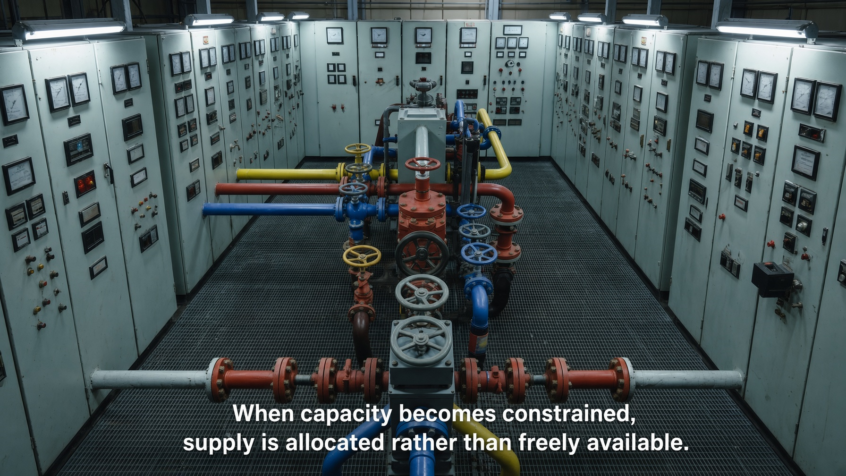
Allocation Rules: How Preferred Customer Status Becomes Physical Supply In every constrained market, allocation rules determine who receives supply when capacity becomes scarce. Nuclear fuel provides a particularly clear example because uranium, conversion, and enrichment markets operate under long lead times, limited surplus capacity, and high barriers to entry. The same commercial mechanisms appear wherever demand exceeds available supply, from … Read More
The Supplier Relationship Imperative: Building Preferred-Customer Status as a Core Resilience Pillar in Constrained Nuclear Fuel Markets

The Nuclear Fuel Market Today Looks Uncomfortably Similar to Automotive Chips in 2020/21 In a market where physical access has become the binding constraint, Supplier Relationship Management is no longer optional soft-skill work. It is a measurable component of Total Cost of Supply Security. Introduction: From Price Optimization to Access Security For much of the past two decades, nuclear fuel … Read More
Quantifying Nuclear Fuel Security: Applying the Total Cost of Security (TCS™) Framework

From theoretical risk to board-ready economic outcomes — how leading fuel buyers measure, justify, and optimize the true cost of supply resilience. Introduction: The Nuclear Renaissance Meets Procurement Reality Across North America, policy makers are increasingly positioning nuclear energy as a cornerstone of long-term energy security, grid reliability, and decarbonization. New reactor projects, life extension programs, small modular reactor (SMR) … Read More
From Policy to Procurement: What North American Nuclear Strategies Really Mean for Fuel Buyers
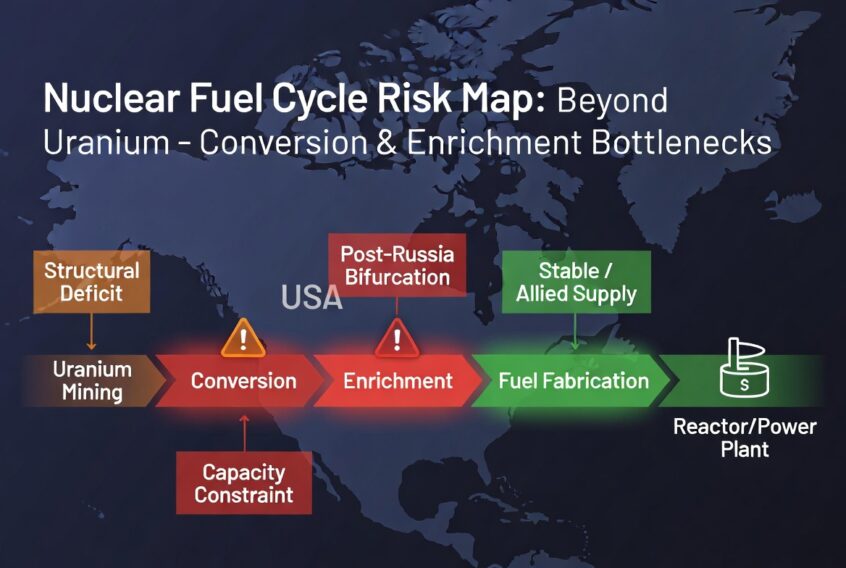
Uranium Procurement Strategy in a Supply Deficit Market: How nuclear fuel buyers secure uranium supply in a tightening market. The near simultaneous release of Canada’s Nuclear Energy Strategy and the United States’ 2026 National Defense Strategy marks a clear geopolitical shift: North America is prioritizing secure, allied nuclear fuel supply chains in an increasingly fragmented global market. For governments, this … Read More